


This guide is for conference planners, HR teams, and event organizers comparing large-group options. It shows how to choose a format, pressure-test the logistics, and give a provider the information needed for a useful proposal.
Start with the room, the clock, and the goal
Write one sentence about the result you want: help new colleagues meet across departments, energize a conference after a long session, celebrate a milestone, or give people a shared challenge. Then list the facts that constrain the event: expected and maximum headcount, venue, available time, audience mix, accessibility needs, and how fixed the agenda is.
Ask what a participant will be doing five minutes after arriving, halfway through, and at the finish. If the answer is mostly waiting for instructions or watching one volunteer, the activity may need smaller teams, parallel play, or a different format. Our general event planning checklist can help you create the one-page brief; use the questions below to adapt it for scale.
Choose a format that can scale without losing participation
A large event does not need every person to do the same thing at the same moment. Choose the structure that fits the space and arrival pattern, then confirm the actual capacity and production plan with the provider.
One hosted room
A live game show can give a seated audience one shared start, clear rounds, and a common finale. It works best when teams can respond or play together rather than leaving the action to a few people on stage. The Go Game’s Original Game Show combines a host, screen, team play, and mobile access; ask how your room, sound system, and team layout would support it.
Parallel stations
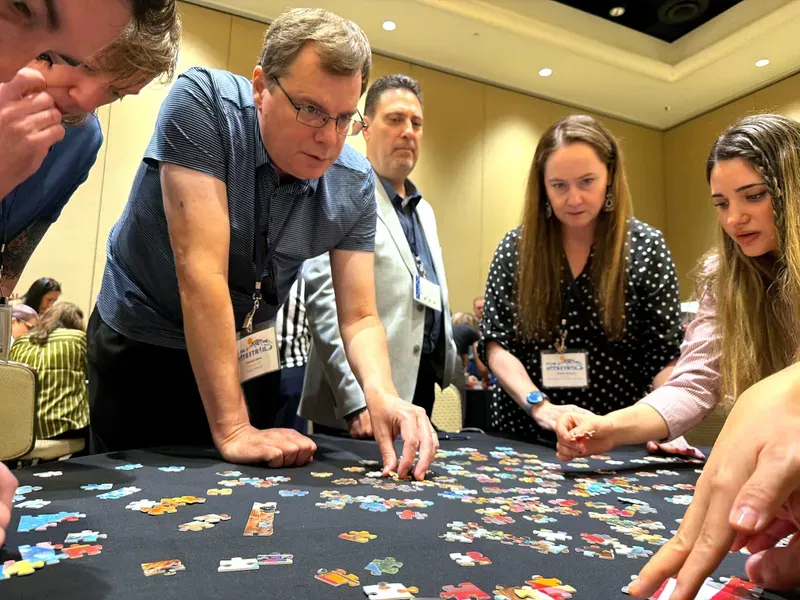
For a reception or event with staggered arrivals, stations let people join short activities at their own pace. Plan how many guests each station can serve, where a line will form, and how someone who prefers to observe can still feel included. The Go Game’s Game Stations can mix game-show moments, creative builds, and casual challenges, with the lineup tailored to the crowd and space.
An adventure across a venue or neighborhood
A scavenger-hunt format spreads teams across a larger area and can make a campus, hotel, or neighborhood part of the experience. Check walking distances, accessible routes, boundaries, weather, team check-in, and where everyone will regroup. Classic Adventure offers location-based riddles and creative photo or video challenges; the exact route and host plan should fit your venue.
A layer across a conference
When people cannot leave the main agenda for one block, a game that runs between sessions can create repeated chances to meet. Decide how prompts fit breaks, where results appear, and how the experience ends. The Go Game’s Conference Game can be designed as one event or as a game layer across a meeting. Networking Bingo is another option for a short warm-up or a longer conference experience.
Turn headcount into a participant flow
Map the journey from arrival to departure. Where do people check in? How are teams formed? How do late arrivals join? When does a group move to a station or receive its next prompt? Who resets an activity or answers a question? Where do participants go for the finale? These details determine whether the event feels lively or crowded.
For a seated format, test sightlines and audibility from the back of the room. For stations, estimate throughput and leave space for people who are waiting, watching, or moving between activities. For an outdoor adventure, identify the start, finish, boundaries, and an accessible route. Ask the provider to walk through one participant’s experience, not only show a program name.
Confirm space, technology, and access early
Send the provider a floor plan or venue contact before finalizing the format. Confirm usable floor space rather than relying only on a listed room capacity. Note stage and screen positions, power, internet, microphone and speaker coverage, load-in access, storage, setup time, and any venue restrictions. Ask which items the provider brings and which the venue or your team must supply.
Make participation options concrete. Can people contribute while seated? Are instructions visible as well as spoken? Is there a quieter way to take part? Are paths between stations step-free and wide enough? For a hybrid group, describe one round from the remote participant’s point of view. Invite access requests privately and share only what the producer needs to support the person.
If you plan to use phones or a shared network, test the joining process and agree on a backup for a weak signal. For an outdoor event, name the person who makes a weather call and the latest time the plan can change. Do these checks before the room and vendor commitments are locked.
Give every production handoff an owner
A large event needs a clear chain between your organizer, venue, AV lead, provider, host, and any internal volunteers. Ask who designs the experience, who produces it on site, who welcomes attendees, who handles technical issues, and who can approve a schedule change. Put names and contact methods in the run of show.
Confirm staffing against the actual floor plan and format rather than borrowing a universal staff-to-guest ratio. A single-room show, a multi-station reception, and an outdoor adventure need different kinds of support. Ask the provider to explain how participants get help without pulling the host away from the main program.
Build a run of show that survives a change
Work backward from the hard end time. Include load-in, sound and connection checks, check-in, welcome, instructions, play, transitions, finale, teardown, and the handoff to the next agenda item. Leave a little buffer where people move or technology changes. Your host and venue should see the same version.
Then rehearse three likely changes: fewer or more attendees than expected, a late start, and a space or technical issue. Decide what can be shortened, what cannot move, and who makes the call. Share the arrival instructions and any participation needs with attendees before event day, so the opening minutes are spent playing rather than solving avoidable confusion.
Budget the whole event and compare proposals on scope
A provider fee is one line in the total. Add venue, AV, food, travel, materials, access support, transportation, and the staff time your company will contribute. Ask which costs change with headcount and which are fixed. The Go Game’s team building cost guide can provide a starting estimate; a tailored quote should identify the chosen format, location, staffing, and inclusions.
When comparing providers, send the same brief to each one. Ask for the participant flow, named production roles, room and technical requirements, accessibility plan, contingency plan, and itemized scope. Our buyer’s guide has a broader provider scorecard. For a large group, the strongest proposal also explains how the experience works at your actual venue and headcount.
Questions to send a large-group team building provider
What will every participant do during the opening, middle, and finish? How will teams be formed, and how will late arrivals join? What room layout, equipment, and connectivity does the format require? How will people request a different way to participate? Who is on site, and who handles a problem while the host keeps the event moving? What changes if headcount, weather, or timing shifts? What do we need to provide, and what is included in the quote?
Ask for an example relevant to your venue or format, but treat it as evidence of delivery rather than a promise of identical results. The Go Game’s case studies show several kinds of events you can use to frame those questions.
Frequently asked questions
What activities work for 100 or more people?
Hosted game shows, parallel stations, venue-wide adventures, and conference-long games can all work. The right choice depends on whether everyone arrives together, how much space and time you have, and what you want participants to do with one another.
How much time should I allow?
Start with the fixed agenda slot, then account for arrival, instructions, play, a finish, and movement to the next session. Experience durations vary. Ask the producer to propose a run of show for your actual headcount and room rather than assuming every minute can be used for play.
How do I keep a large event inclusive?
Offer several ways to contribute, check access routes and sound, give instructions in more than one form, and avoid putting every participant on stage. Invite individual access requests privately and confirm workable options with the provider before booking.
If you are planning a conference, offsite, or company-wide celebration, explore The Go Game’s conference experiences and tell us about your group. Share the room, timing, headcount range, and goal; we can help you compare formats and define the production details.